
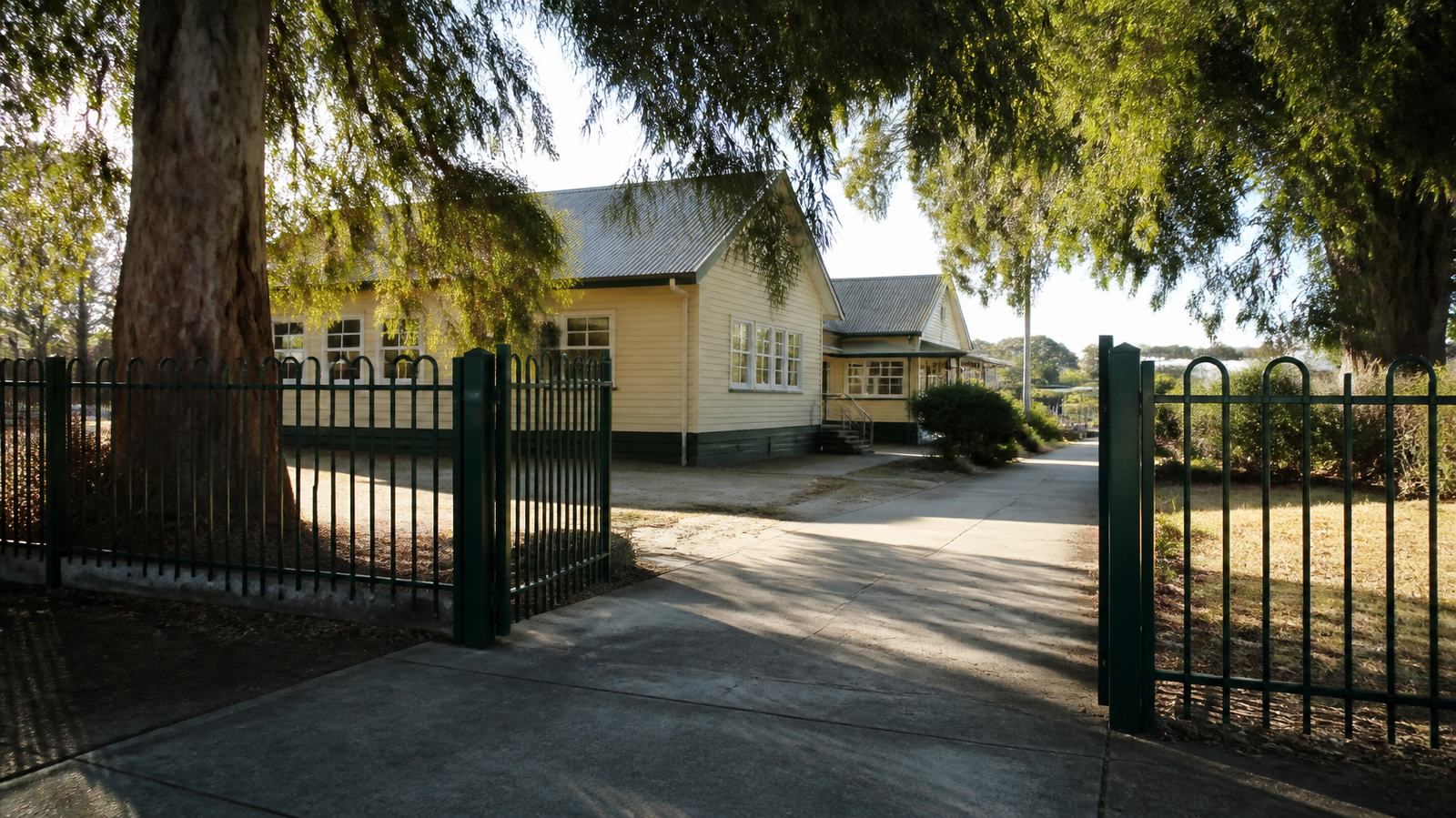
You’ve bought the school shoes. Labelled the lunchbox. Practised wearing the hat.
But the thing keeping you awake isn’t whether the uniform fits.
It’s whether they’ll cope.
Will they ask for help? What happens when the classroom gets noisy? Will someone notice they’re overwhelmed before things fall apart?
If your child has a disability, anxiety, ADHD or additional support needs, these questions can feel bigger than the school bag.
And when you live regionally, finding help can mean juggling appointments, travel, work and the rest of the family.
You don’t have to work it all out alone.
Start with one thing
You put the new lunchbox on the kitchen table. Your child pulls at the clip, pushes it away and asks for something else.
You’ve got dinner to organise. It’d be quicker to open it yourself.
But you’ve spotted something useful before the first school morning. You could practise together, try a different container or let the school know they’ll need a hand.
“Getting ready to start school” is a big job. Opening a lunchbox is a good start.
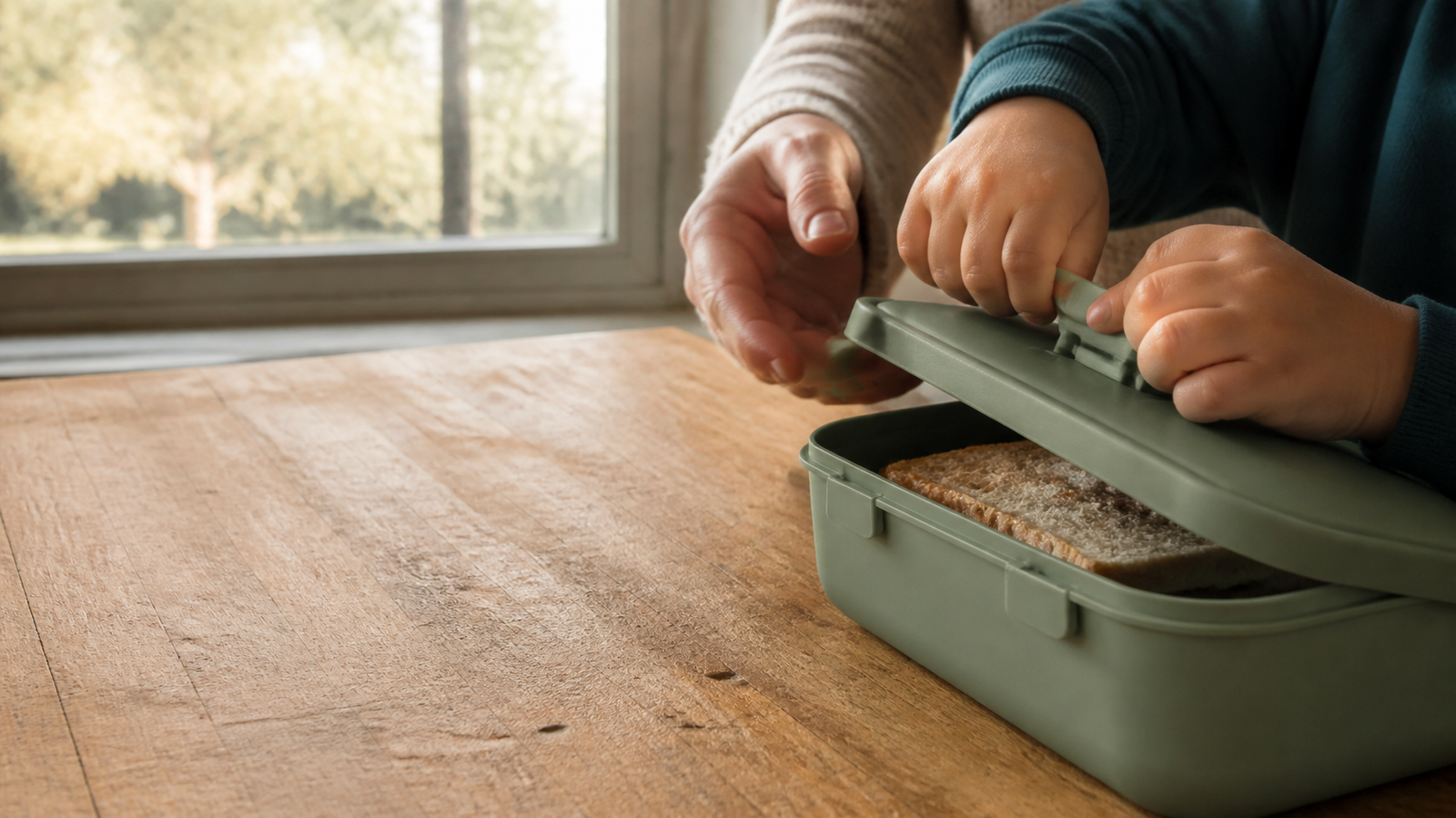
Other useful things to practise include:
Asking for help or a break.
Saying goodbye.
Using the toilet.
Taking turns.
Moving from one activity to another.
Pick something that matters to your child and your family. You don’t need to turn the Christmas holidays into a training camp.
Plenty of children need a hand
In the 2024 Australian Early Development Census, nearly one in four children included in the developmental indicators—23.5%—were assessed as developmentally vulnerable in at least one area. Those areas include communication, social competence and emotional maturity. Australian Government: 2024 AEDC results
So if you’re worried about more than whether your child can write their name, you’re in good company. Communication, emotions, relationships and everyday independence all deserve attention.
Asking for support early is a sensible step.
Make a few things familiar
You’ve driven into town for a school visit. Your child hangs back at the classroom door while you try to listen to the teacher and keep an eye on the corridor.
There’s a lot to take in.
Ask whether you can return at a quieter time. Walk from the gate to the classroom. Find the toilets. With permission, take a few photos to look through at home.
You’re helping your child get to know the place, the people and what happens next.
At home, try a small part of the morning using the actual school gear. Can they manage the bag zip? Do the socks feel uncomfortable? Does putting the uniform on bring up worries you hadn’t heard about yet?
Keep it manageable. Notice what helps.
The NSW Department of Education recommends contacting the school early when your child has disability or additional needs, so transition planning and supports can be discussed. If school’s just around the corner, start that conversation now. NSW Education: Transitioning to primary school
Share what you know about your child
You’re sitting in a school meeting with a folder of reports on your lap.
Then someone asks, “What helps when they get overwhelmed?”
You know quite a bit about that.
You might explain that your child goes quiet before becoming distressed. That more questions can make things harder. That fewer words, a familiar adult and somewhere quieter can help.
Bring that knowledge into the conversation, alongside the reports.
Ask who your main contact will be and how you’ll share concerns. You shouldn’t have to squeeze every important conversation into the rush at the gate.
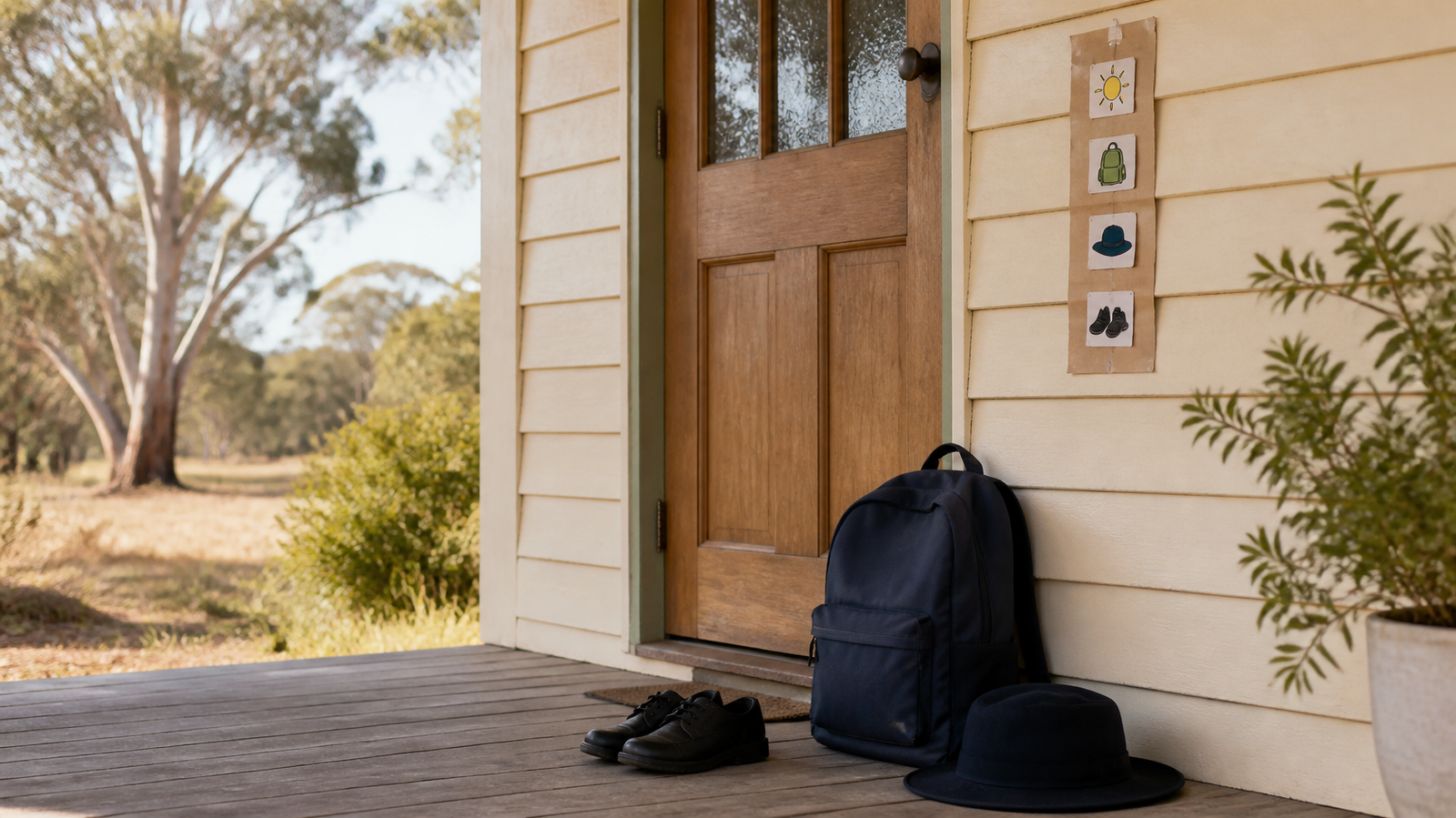
Before the meeting, jot down:
What helps: movement, pictures, a warning before a change or a trusted adult.
What to watch for: going quiet, pacing, hiding, getting louder or struggling to respond.
What they enjoy and do well: the interests and strengths that help people connect with them.
Look at what happens before the hard bit
The school visit seemed to go okay.
Then you get home, ask your child to take their shoes off and everything unravels.
You’re in the hallway wondering how such a small request became such a big moment.
Look back over the day. The unfamiliar adults. The noise. The instructions. The missed snack. The effort of holding it together.
If you’re worried about running away, hitting, refusing, shutting down or becoming very distressed, it’s worth getting help to understand the pattern.
What’s difficult? What might your child be struggling to communicate? What skills or changes could help?
Those answers give us somewhere useful to begin.
How Dauntless can help
We work with your child, your family and, with your consent, their school to build practical support around everyday life.
That can include sessions directly with your child, sessions with parents and carers, and linking in with the school.
Perhaps getting out the door is already the hardest part of your day. You’re watching the clock, repeating instructions and wondering how you’ll manage when there’s a school bell involved.
We could work with you to understand where the routine gets stuck, practise a manageable sequence with your child and plan how to respond when things get difficult. With your permission, we could also talk with the school about a predictable arrival and handover.
Then we’d check what’s helping and adjust what isn’t.
You might only need a couple of appointments to talk things through, try a few strategies and feel more confident about what comes next.
Or it might help to have someone alongside you for longer. We can stay involved and work regularly with your child and family through their first year at school—and beyond, if that’s useful.
We’ll work out the pace together, based on what your child needs and what’s helping. The plan needs to fit your family, including the travel, work commitments and time you actually have.
Depending on your child’s needs, we can help with:
School-ready skills: communication, turn taking, managing emotions, routines and independence.
Coping with change: preparing for unfamiliar places, people and expectations.
Behaviour support: understanding difficult moments and developing positive, practical responses.
Working together: helping home and school use consistent routines, supports and responses.
What about funding?
Mental Health Treatment Plans
A GP can assess your child’s eligibility for a Mental Health Treatment Plan, often called a mental health care plan, and refer them to an eligible clinician.
Eligible patients can receive Medicare rebates for up to 10 individual mental health treatment sessions per calendar year, with referral and review requirements. Services Australia: Mental health care and Medicare
Dauntless can provide eligible sessions directly with children and involve parents or carers where appropriate. Talk to us about the right clinician, what’s covered and any out-of-pocket costs.
NDIS-funded supports
For children with suitable NDIS funding, we can provide support that connects the work happening with your child, your family and their school.
Depending on their plan and needs, that may include direct sessions, family guidance, behaviour support and school liaison—helping useful strategies carry into everyday routines.
We’ll work through your child’s goals, available funding and arrangements for involving the school with you. NDIS: Therapy supports
You don’t need a perfect plan before you call
You might have a folder full of reports. You might simply have a feeling your child is going to find this hard.
Either way, we can start with a conversation.
Tell us your child is starting school, what worries you most and what help you already have. We’ll talk through how Dauntless may be able to help and what the next step could look like.
Ready to make a referral?
Prefer to talk first?
Tell us a little about what’s happening and our team can help you work out the next step.